
The World That Is
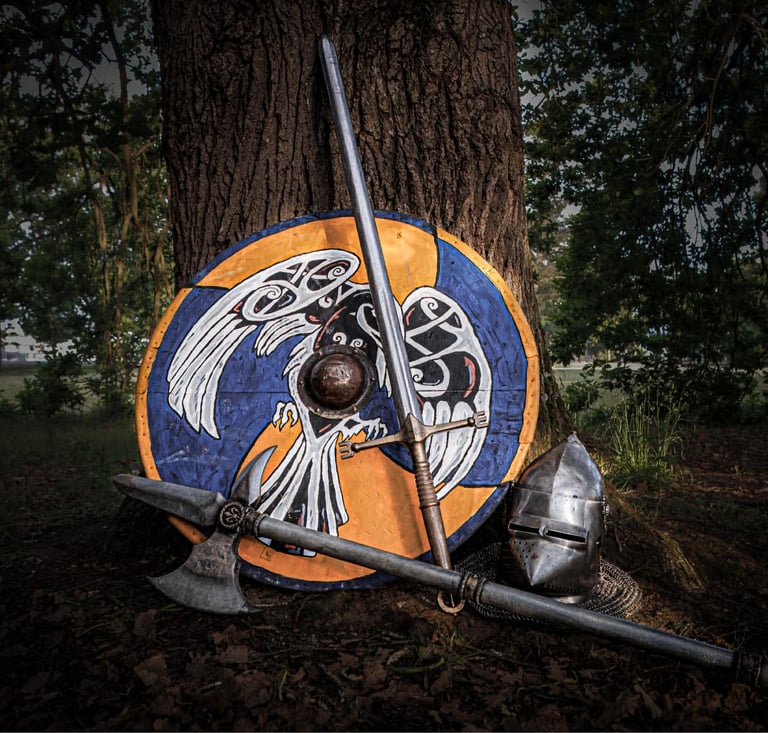
The years after The Calamity, hereafter dated A.C., were some of the hardest humanity would endure. The Elves and Dwarves eroded into memory, and the Estel, the Elves that remained and aided humanity during the Calamity, would fade into the woods, becoming nothing more than folk legend, taking magic with them. The blight of Bahakul warped and infested the very nature of Amar, spawning creatures and supernatural beings that would forever live in the shadows, waiting to snatch and devour any unlucky soul. The Wizards, with their leader now turned to crystal, became a rare sight, wandering the wilds, only appearing to give wisdom and advice, even to those that may have never even seen a Wizard.
The human realms split into two shortly after the Calamity: the North and South. For a time, the kingdom of Arnir held power in the North, the last of the great kings relying on the memory of the once respected nation. In time, however, others rose to challenge a weakened Arnir and their grip on the Northern kingdoms fell, fracturing into six distinct cultures, all ruled by a singular royal house, and the Northern Kingdoms would linger on.
The Southlands followed a different path. The peoples of the south formed a great nation, independent of the “northerners”. This prosperous new world would see medicines, spices, silks and metals the likes of which the northern kingdoms of Amar had never seen. The regions of Kaskar, Marqaa and Sarahir would be formed and live in harmony, unbothered by the dealings of the northern folk.
For a time, these two regions of Amar found stability. The six northern realms were ruled by a king, and the southlands by its own council. As ever in the affairs of men, ambition gave rise to bloodshed and war festered in the heart of Amar once more. Unhappy with the current rule of law, the realms erupted into conflict, this time not with great winged serpents from the sky, but against one another in a bloody, seemingly endless civil war. The south largely stayed out of the petty squabbles of the northern war until bloodshed reached the gates of Marqaa. They entered the war, choosing the most profitable option; supporting the old kingdom of Gwynmôr, and ultimately bringing an end to the destructive conflict. At the behest of the wandering wizards, the regions of Amar as humans knew it were changed. With the stroke of a quill, lines were redrawn and realms were broken apart according to the nations of old; the distinct cultures that once flourished in the North were set to re-emerge, under the watchful guidance of the wizards.
The Northern realms, as they would be commonly known, were resettled by hardy folk. The Theoran; horselords and reivers of the great plains, their heritage deeply rooted in family. The Orongaard; stone hardened people who would rebuild the great fortresses of old to keep a watchful eye on the mountains to the north. And the Einlir; rough hewn warriors and tradesmen that dominate the great river Ein.
The High Kingdoms saw old houses rebuilt. Radhir would resettle into the nook of the Eastern mountains, expanding into great fields and farmlands, cultivating a rich tapestry of traditions defined by the horrors of the dark forest. Gwynmôr; a proud ally of Arnir, would establish the royal capital of Tarastel, becoming a beacon of beauty and remembrance to govern the 9 regions. And the fallen kingdom of Arnir would fade into a whisper of its former glory, tolling its twelve bells each hour to echo through each tavern, hall and barracks to remind its people of what it lost.
And the Southlands, while still under the ruling law of the Queen of Gwynmôr, the three regions retained most of their independence compared to the other regions. Kaskar; a religious-cultural realm defined by preservation - of tradition, of the body, of the soul, and of the bronze that guards them all. Marqaa; boasting the peak of human architecture, clothing and armours of gold with streets that shine with the sun. A true beacon of wealth, trust and prosperity. And the Sarahir; desert-dwelling folk that speak in bold, whispered tones brandishing individualised knives of bone. Ever shifting trade caravans bringing strange trinkets from far across the vast, shimmering expanse they call home.
With the magic of the Elves remembered only as fireside tales or folklore in dusty history books, humans came to develop alchemy for healing and remedies for common ailments. Blacksmiths, in attempts to replicate the metals of old, would discover new ways to forge steel into tools for both combat and everyday life. Art, culture and tradition grew in every corner of Amar. Gwynmôr has ruled for over 400 years to this very day, now under the grace and beauty of Queen Amara and the kingdoms of the once fractured Amar would thrive in peace. The Southlands, having supported her great ancestors in the war, remained largely independent; a reward for their support in the dark times but still under the rule of Queen Amara. The regions of Kaskar, Marqaa and Sarahir would once again prosper with a great wealth of trade and advanced culture.
The 6 regions of the High Kingdoms and Northern Realms live in relative harmony, though not without conflict and disagreement; their peoples prosper.
In the year 2024a.c., the Red Wizard came to Amara with word of a great Elven city to the east. Nestled in the great mountains it had remained hidden with magic since the Calamity, magic that was now fading. Many had ventured into the forests along those mountains over the generations since the Blight took hold; none ever returned. Now, under the behest of her advisor, the Queen sought the help of some Arnirian rangers to find this lost city. She waited anxiously for over a year until two rangers, from a company of 12, returned. They informed her of their discovery: a vast, forested expanse, surrounded by seemingly impassible mountains, at which in the center, shot up a magnificent white city. Circular in its walls, with a spire in the center, it was said to have been eroded with time and the Blight but ripe for discovery none the less.
With haste, the Queen sent ravens, riders and messenger ships to all of the realms under her kind rule. The call to adventure was sounded, and the city of Annwyn had been named.